Starting a new habit is exciting—but staying consistent is where most people struggle. Research from the Harvard Medical School, the American Psychological Association, and the Stanford School of Medicine reveals that consistency depends less on willpower and more on the systems, environment, and emotional strategies you put in place. Habits succeed when they are small, repeatable, rewarding, and aligned with your identity.
The truth is that your brain prefers what is familiar. Changing a behavior requires repetition and gentle reinforcement, not perfection. This guide explains why habits fail, how to build habits that last, and the psychological tools that help you stay consistent over time.
Why Consistency Is Difficult: What the Science Says
The human brain operates largely on automatic patterns. According to Harvard research, up to 45% of daily actions are habitual. When trying to form a new habit, you’re essentially rewiring neural pathways—and the brain naturally resists change because it requires effort.
Common reasons consistency breaks down include:
- starting too big
- lack of clear cues or structure
- relying only on motivation
- underestimating environmental triggers
- inconsistent routines
- self-criticism after setbacks
Fortunately, habits become easier when you design them around how your brain naturally works instead of forcing discipline alone.
Step 1: Start With Identity, Not Outcomes
Stanford behavior expert BJ Fogg and many cognitive researchers emphasize that habits stick when they align with your identity. Instead of focusing on what you want to achieve, start with who you want to become.
For example:
- Goal-based: “I want to read more.”
- Identity-based: “I am a person who reads every day.”
Identity shapes behavior. When you see yourself as the kind of person who performs a habit, consistency becomes natural.
Step 2: Make Your Habit Extremely Small
Harvard and Stanford research repeatedly show that smaller habits are easier to repeat and build upon. They reduce resistance and create momentum—key ingredients for consistency.
A “small” habit could be:
- 1 minute of meditation
- reading 1 page
- stretching for 30 seconds
- writing one sentence in your journal
This aligns perfectly with the micro-habit concept known as the “Two-Minute Rule.” Learn more here:
The 2-Minute Rule: Start Small, Stay Consistent
Step 3: Use a Cue-Based Habit Design
Your brain depends on cues to trigger behaviors. APA research shows that habits form when you attach them to existing routines or environmental triggers.
Effective cues include:
- time-based cues (e.g., right after waking)
- location cues (e.g., at your desk)
- action-based cues (e.g., after brushing your teeth)
An example:
“After I pour my morning water, I meditate for 1 minute.”
This predictable cue increases repetition, which strengthens neurological connections.
Step 4: Reduce Friction and Barriers
Habits fall apart not because people lack motivation but because the behavior is too difficult or inconvenient. Reducing friction dramatically increases consistency.
Examples:
- Lay out exercise clothes the night before.
- Keep your journal visible and open.
- Organize your workspace for focus.
- Prepare healthy snacks ahead of time.
To understand how environment shapes habits and mindset, explore:
How Decluttering Your Space Affects Your Mind
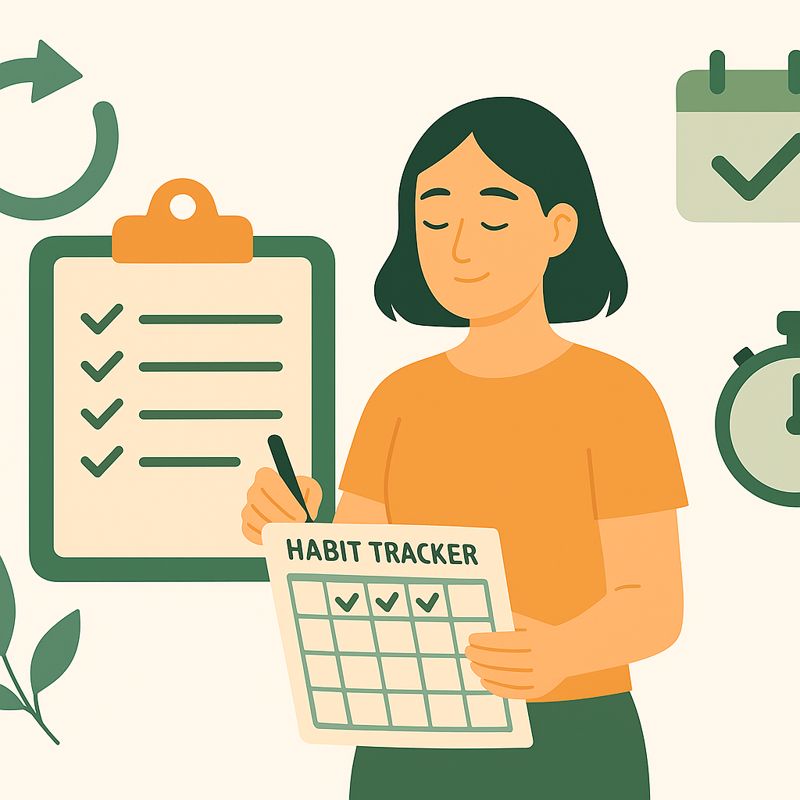
Step 5: Track Progress the Right Way
Tracking habits increases self-awareness and helps the brain associate action with progress. However, tracking should be simple—otherwise the habit becomes burdened.
Effective tracking includes:
- a small grid or checklist
- a habit-tracking app
- a simple daily streak mark
Harvard research suggests that visible progress reinforces motivation through dopamine release, making future repetition easier.
Step 6: Celebrate Small Wins
Your brain strengthens habits through reward pathways. Even tiny celebrations—like a smile, a deep breath of satisfaction, or saying “yes!”—help make the habit stick.
APA researchers note that positive reinforcement is one of the strongest drivers of behavior change.
Small celebrations teach your brain:
“This behavior feels good. Let’s repeat it.”
Step 7: Create a Stable Routine Structure
Habits thrive when placed inside routines because routines reduce decision fatigue. Morning and evening routines are particularly powerful because they bracket your day and create predictable structure.
To build this, try adding your habits inside an existing routine, such as your morning ritual. For help creating one:
Morning Routines for Peak Productivity
Step 8: Expect Resistance—and Plan for It
Every habit encounters resistance. The mistake is viewing resistance as a failure. Stanford research shows that resistance usually appears after the initial excitement fades—this is normal and temporary.
Examples of resistance:
- “I’m too tired today.”
- “I’ll do it later.”
- “One day won’t matter.”
You can overcome resistance by using a “minimum version” of your habit. For example:
- Instead of 20 minutes of exercise → 2 minutes of movement
- Instead of 10 pages of reading → 1 page
- Instead of meditation → 5 deep breaths
The key is showing up, not being perfect.
Step 9: Build Accountability Into the System
Accountability increases follow-through by leveraging social and emotional motivation.
Accountability options include:
- a friend or partner with a shared habit goal
- a coach or mentor
- a habit-tracking community
- publicly committing to a habit
Even writing down your commitment increases success rates according to APA behavior research.
Step 10: Use Emotional Regulation Tools
Habits fail when emotions overwhelm motivation—stress, fatigue, or frustration break consistency. Learning emotional regulation supports long-term habit success.
Tools include:
- deep breathing exercises
- mindfulness practices
- journaling thoughts and triggers
- gratitude reflection
You may find these helpful:
How Deep Breathing Can Help Calm the Mind
Journaling Prompts for Self-Discovery
Step 11: Redesign Your Environment to Support Habits
Environment shapes behavior far more than motivation does. Harvard environmental psychology studies show that the easier a behavior is to perform, the more likely it becomes a habit.
Use environment design to your advantage:
- Place cues where you can see them.
- Remove temptations that derail habits.
- Organize your workspace to reduce clutter and distraction.
- Choose locations that inspire focus or calm.
To learn more about creating distraction-free spaces, visit:
How to Design a Distraction-Free Work Day
Step 12: Allow Imperfection—Consistency Is Not All-or-Nothing
The biggest threat to habit consistency is the belief that missing a day means failure. APA research shows that missing one day has almost no impact on long-term habit formation. What matters is returning to the habit quickly and compassionately.
Instead of aiming for perfection, aim for recovery:
- If you miss a day → resume the next day.
- If you break a streak → rebuild it gently.
- If motivation drops → rely on structure, not emotion.
Be patient. Habits grow through repetition, not restriction.
Building Habits That Match Your Personality
Habits are not one-size-fits-all. Tailor your approach based on your personality and lifestyle.
- The Planner: thrives with schedules, checklists, and structured routines.
- The Creative: prefers flexible routines with open-ended habits.
- The Minimalist: benefits from one key habit at a time.
- The Social Motivator: succeeds through accountability and shared goals.
Final Thoughts
Staying consistent with new habits doesn’t require perfection or endless motivation—it requires systems, simplicity, self-awareness, and emotional flexibility. Habits grow through repetition, not force. When you start small, design supportive environments, and celebrate your progress, you build habits that last a lifetime.
Your goal isn’t to be perfect—it’s to be consistent enough that the habit becomes part of who you are.
More habit-building tools from MindBloomDaily:
The 2-Minute Rule: Start Small, Stay Consistent
Time Management Tips That Actually Work