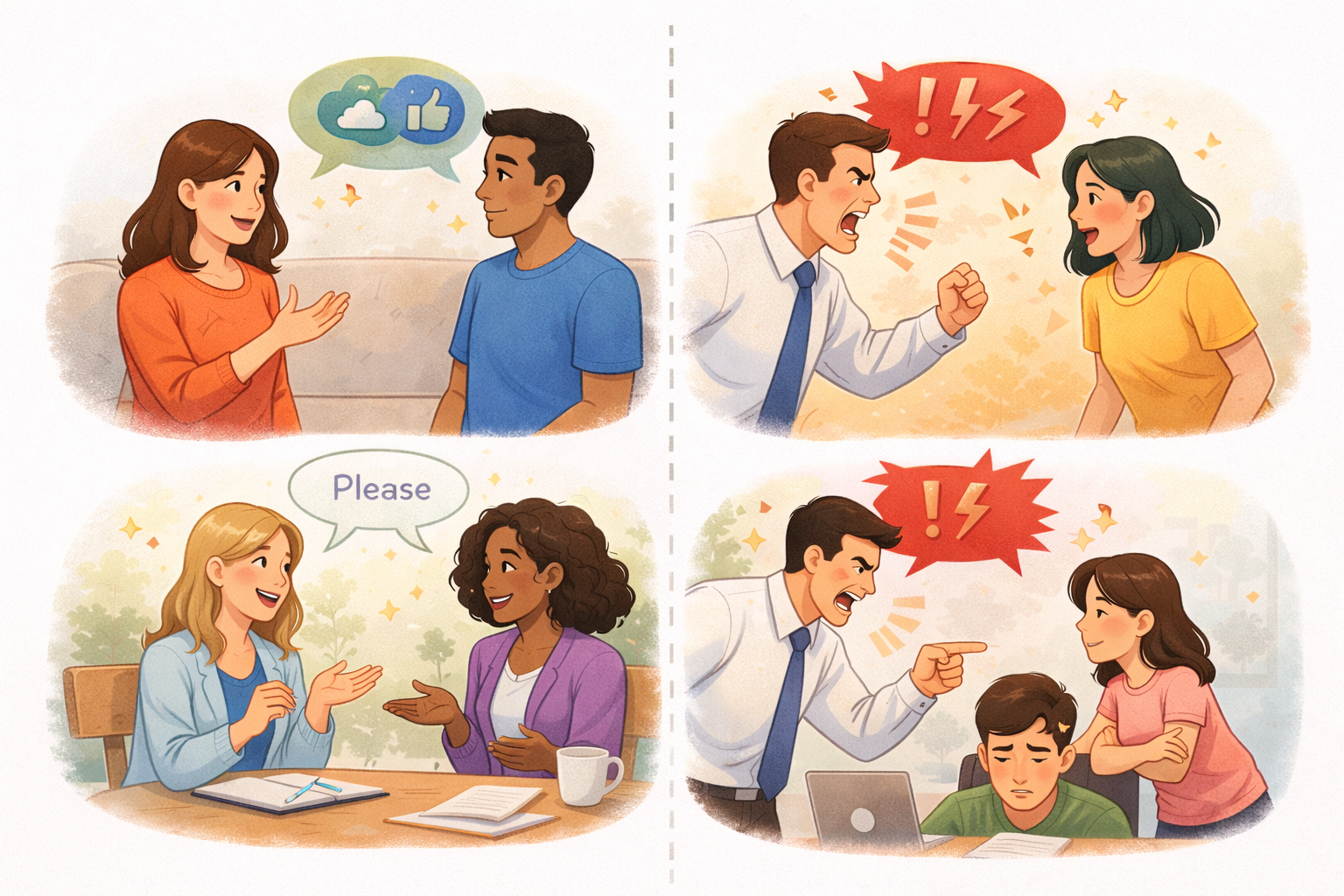
How we communicate shapes our relationships, emotional wellbeing, and ability to resolve conflict. While many people believe they are being “direct,” communication can often slip into aggression without intention. Understanding the difference between assertive and aggressive communication is essential for healthy relationships and effective self-expression. Research from Harvard Medical School, the American Psychological Association, the National Institutes of Health, and Stanford University highlights assertive communication as a key skill linked to emotional intelligence and relationship satisfaction.
Assertive communication allows people to express needs, thoughts, and feelings clearly while respecting others. Aggressive communication, by contrast, prioritizes dominance and control, often damaging trust and connection.
If you’re working on building healthier communication patterns, you may also find this helpful:
Handling Conflict Mindfully
What Is Assertive Communication?
Assertive communication is the ability to express yourself honestly, respectfully, and directly—without violating the rights or boundaries of others.
It balances self-respect with consideration for others.
Key characteristics of assertive communication include:
- clear expression of needs
- respectful tone
- confidence without hostility
- openness to dialogue
Assertiveness is often misunderstood as aggression, but it is fundamentally different.
What Is Aggressive Communication?
Aggressive communication occurs when a person expresses themselves in a way that disregards or violates others’ feelings, needs, or boundaries.
It often includes:
- raised voices
- blame or accusations
- interrupting
- threatening language
Aggression may feel powerful in the moment, but it often leads to conflict, resentment, and emotional distance.
Assertive vs Aggressive: The Core Differences
Although both styles involve speaking up, their intentions and effects differ.
Assertive communication:
- seeks mutual understanding
- respects boundaries
- invites collaboration
Aggressive communication:
- seeks control or dominance
- ignores boundaries
- creates fear or defensiveness
The Psychology Behind Aggression
Aggressive communication is often rooted in stress, fear, or learned behavior.
Harvard research shows that when people feel threatened or unheard, the brain’s threat system activates, reducing access to empathy and reasoning.
This explains why aggression often appears during conflict.
Why Assertive Communication Builds Healthy Relationships
Assertive communication creates emotional safety.
APA research links assertiveness to:
- higher relationship satisfaction
- lower stress levels
- better conflict resolution
When people feel respected, they are more open to listening and compromise.
Assertiveness and Emotional Intelligence
Assertive communication is a key component of emotional intelligence.
It requires awareness of your own emotions and sensitivity to others’ feelings.
Explore emotional awareness here:
Emotional Triggers and Self-Awareness
Assertive Language vs Aggressive Language
The words we choose shape how messages are received.
Aggressive language examples:
- “You never listen.”
- “This is your fault.”
Assertive language examples:
- “I feel unheard when I’m interrupted.”
- “I need clarity on this.”
Assertive language focuses on experience rather than blame.
Body Language and Tone Matter
Communication is not just verbal.
Aggressive communication often includes tense posture, glaring, or sharp tone.
Assertive communication involves calm eye contact, steady voice, and relaxed posture.
Assertiveness and Boundaries
Assertive communication is essential for setting boundaries.
It allows you to say no without guilt and yes without resentment.
Learn more about boundaries here:
How to Set Boundaries Without Guilt
Why Aggression Often Backfires
Aggressive communication may achieve short-term compliance, but it damages trust.
NIH research shows chronic exposure to aggressive communication increases stress and emotional withdrawal.
Over time, aggression erodes connection.
Assertiveness in Conflict Situations
Assertiveness helps keep conflict productive.
It allows disagreement without demeaning others.
For conflict strategies, explore:
Handling Conflict Mindfully
How to Shift from Aggressive to Assertive Communication
- pause before responding
- identify the core need
- use “I” statements
- lower volume and pace
- listen actively
Assertive Communication at Work
In professional settings, assertiveness supports clarity and respect.
It helps prevent misunderstandings and power struggles.
Assertive employees report higher job satisfaction.
Assertive Communication in Personal Relationships
In close relationships, assertiveness fosters trust and emotional safety.
It allows partners to express needs without fear of conflict escalation.
Common Myths About Assertiveness
- Myth: Assertive people are selfish
Reality: Assertiveness respects both parties - Myth: Aggression shows strength
Reality: Emotional regulation shows strength - Myth: Silence avoids conflict
Reality: Suppression creates resentment
Practicing Assertiveness Daily
Assertiveness is a skill developed through practice.
Start with low-stakes situations and build confidence.
When Professional Support Helps
If communication patterns feel entrenched or escalate frequently, professional guidance can help build assertiveness skills.
Final Thoughts
The difference between assertive and aggressive communication lies in intention, tone, and respect. Assertiveness empowers you to express yourself clearly while maintaining connection.
By choosing assertive communication, you reduce conflict, strengthen relationships, and protect emotional wellbeing.
Assertiveness is not about winning—it’s about understanding.
More communication guides from MindBloomDaily:
The Role of Empathy in Relationships
How to Respond Instead of React