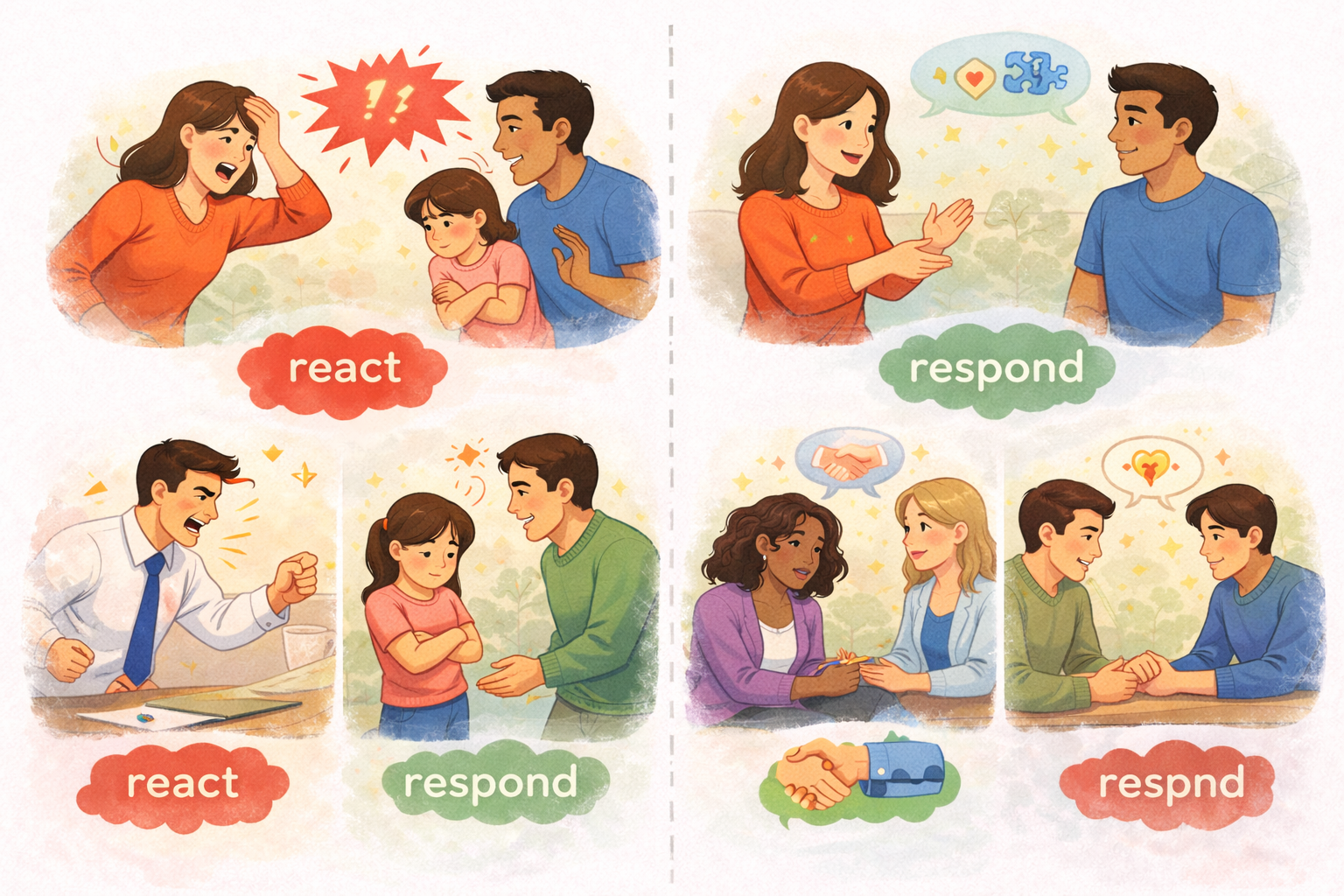
In emotionally charged moments, many people react before they have time to think. A sharp comment, a stressful email, or an unexpected conflict can trigger immediate responses that later feel misaligned with personal values. Learning how to respond instead of react is a foundational skill for emotional regulation, healthy communication, and mental clarity. Research from Harvard Medical School, the American Psychological Association, the National Institutes of Health, and Stanford University shows that pausing before responding improves decision-making and reduces emotional distress.
Responding instead of reacting does not mean suppressing emotions. It means acknowledging feelings while choosing actions intentionally. This skill allows people to act with clarity rather than impulse.
If you are exploring emotional awareness and communication, you may also find this helpful:
Handling Conflict Mindfully
Reacting vs Responding: What’s the Difference?
Reacting is automatic. Responding is intentional.
A reaction happens when the brain’s threat system takes control. A response happens when awareness creates space for choice.
Reactive behavior often includes:
- impulsive words or actions
- defensiveness
- emotional escalation
- regret afterward
Responsive behavior includes:
- pausing before speaking
- clear expression of needs
- emotional regulation
- aligned decision-making
The Brain Science Behind Reactivity
When a person feels threatened—emotionally or physically—the amygdala activates the fight-or-flight response.
Harvard research shows that during this state, access to the prefrontal cortex is reduced. This limits reasoning, empathy, and impulse control.
Reactivity is not a character flaw—it is a biological response.
Why Reactivity Feels So Strong
Reactivity often stems from:
- stress overload
- past emotional experiences
- lack of sleep
- perceived loss of control
NIH research shows that chronic stress lowers emotional regulation capacity, making reactions more likely.
The Power of the Pause
The pause is the bridge between reaction and response.
Even a brief pause allows the nervous system to settle and re-engage the thinking brain.
APA research indicates that short pauses reduce emotional intensity and improve clarity.
The pause may look like:
- a slow breath
- counting silently
- stepping away briefly
Mindfulness as a Response Skill
Mindfulness trains awareness of thoughts, emotions, and body sensations.
This awareness creates choice.
Stanford studies show that mindfulness practices increase emotional regulation and reduce impulsive reactions.
Explore mindfulness fundamentals here:
What Is Mindfulness and How to Start?
Emotional Triggers and Reactivity
Triggers are cues that activate strong emotional responses.
They are often linked to unmet needs or past experiences.
Recognizing triggers allows preparation.
Learn more about triggers here:
Emotional Triggers and Self-Awareness
Breathing to Shift from Reaction to Response
Breath is one of the fastest ways to regulate the nervous system.
Slow breathing activates the parasympathetic response.
NIH-supported research shows that controlled breathing reduces stress hormones.
Helpful breathing techniques include:
- slow nasal breathing
- extended exhales
- box breathing
Explore breath practices here:
Using Breath to Anchor the Mind
Responding Instead of Reacting in Conversations
In communication, reactions often escalate conflict.
Responsive communication focuses on clarity and understanding.
Helpful response strategies include:
- listening fully before replying
- using “I” statements
- acknowledging emotions
Related reading:
Assertive vs. Aggressive Communication
Responding Instead of Reacting in Conflict
Conflict is where reactivity is most visible.
Mindful responses prevent escalation.
Harvard research shows that regulated responses reduce relational damage.
For conflict guidance, explore:
Handling Conflict Mindfully
Responding at Work Under Pressure
Workplace stress increases reactivity.
Responding with intention improves professionalism and decision-making.
Pausing before responding to emails or feedback reduces miscommunication.
Responding Instead of Reacting in Relationships
Relationships benefit from emotional regulation.
Responding communicates respect and care.
Reactivity can create emotional distance.
Explore empathy-based responses here:
The Role of Empathy in Relationships
Boundaries Support Thoughtful Responses
Boundaries reduce emotional overload.
They create space to respond instead of react.
Learn more here:
How to Set Boundaries Without Guilt
Daily Habits That Reduce Reactivity
- adequate sleep
- regular movement
- mindfulness practice
- balanced nutrition
Daily regulation strengthens response capacity.
Common Myths About Reactivity
- Myth: Reactivity means weakness
Reality: It reflects nervous system stress - Myth: Calm people don’t feel strong emotions
Reality: They regulate them skillfully - Myth: Pausing avoids problems
Reality: Pausing improves outcomes
When Responding Feels Difficult
High stress, trauma, or burnout reduce regulation capacity.
Support may be needed to rebuild emotional balance.
Seeking help is a proactive step.
Practicing Response as a Skill
Responding instead of reacting is a skill developed through practice.
Start with low-stakes situations.
Each pause strengthens awareness.
Final Thoughts
Learning how to respond instead of react transforms emotional experiences. It allows clarity, compassion, and alignment with personal values.
Reactivity is natural, but response is powerful.
With awareness and practice, intentional responses become the norm rather than the exception.
More emotional regulation resources from MindBloomDaily:
Trust Building Habits
Emotional Triggers and Self-Awareness