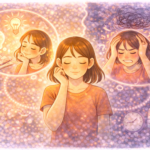
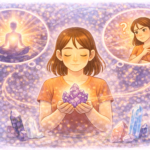
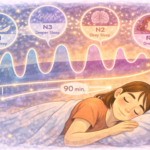
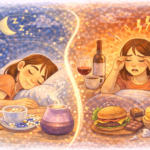
Crystals have been used across cultures for thousands of years, often associated with healing, protection, or mental clarity. In modern wellness spaces, they are frequently linked to “mental energy,” focus, and emotional balance. But an important question remains: do crystals influence mental energy because of inherent properties—or because of belief, expectation, and psychological response? Research from Harvard Health, the American Psychological Association, and neuroscience literature suggests the answer lies less in the crystals themselves and more in how the human mind responds to meaning, ritual, and attention.
This article explores crystals and mental energy through a balanced lens—examining cultural belief, psychological mechanisms, and what science actually supports.
If you are interested in tools that support mental clarity and focus, you may also find this helpful:
Creating a Personal Focus System
What Do People Mean by “Mental Energy”?
Mental energy is not a measurable physical force.
In psychology, it refers to perceived alertness, motivation, emotional clarity, and cognitive stamina.
When people say something “boosts mental energy,” they often mean it improves focus, mood, or sense of control.
These experiences are real—even if the mechanism is psychological.
The Historical Use of Crystals
Crystals have appeared in ancient Egyptian, Greek, Chinese, and Indigenous traditions.
They were often symbolic—used in rituals, protection, or spiritual practices.
There is no historical evidence that crystals were studied scientifically for energy emission.
Their value was cultural and symbolic.
Why Crystals Feel Meaningful to the Mind
The human brain responds strongly to symbols.
Objects that represent calm, protection, or focus can influence emotional state.
This effect is not imaginary—it is psychological.
Harvard research shows that belief and expectation shape perception and experience.
The Placebo Effect and Mental Energy
The placebo effect occurs when belief alone produces measurable changes in experience.
APA research shows that expectation can alter focus, mood, and even pain perception.
Crystals may function as a placebo-like tool.
This does not mean the experience is fake.
It means the mechanism is internal.
Attention, Focus, and Ritual
Rituals create structure.
Structure improves attention.
When someone holds a crystal with the intention of focus, attention narrows.
Narrowed attention reduces distraction.
This alone can improve mental clarity.
Related reading:
The Power of Single-Tasking Over Multitasking
Mindfulness and Object Anchors
Crystals often function as mindfulness anchors.
An anchor gives the mind something tangible to return to.
This is similar to breath-based mindfulness.
Stanford research shows that external anchors help stabilize attention.
Related reading:
Using Breath to Anchor the Mind
Do Crystals Emit Energy?
From a physics standpoint, crystals do not emit special mental energy.
Quartz crystals can vibrate under electrical pressure (used in electronics).
This does not translate to influencing human thoughts or emotions.
NIH literature does not support claims of crystal energy affecting the brain directly.
Why People Still Experience Benefits
Experiencing benefit does not require a physical mechanism.
Psychological mechanisms include:
- expectation
- ritual consistency
- attention redirection
- emotional reassurance
These processes are well-supported in psychology.
Crystals and Emotional Regulation
Holding or focusing on a meaningful object can reduce anxiety.
It creates a sense of grounding.
This grounding effect stabilizes emotions.
APA research links grounding techniques to reduced stress response.
Related reading:
Grounding Exercises for Daily Use
Belief Does Not Mean Delusion
Belief is not inherently irrational.
Humans use belief systems to create meaning and motivation.
Problems arise only when belief replaces medical care or evidence-based support.
Using crystals as symbolic tools is psychologically neutral.
Crystals as Focus Objects
Some people place crystals on desks or carry them.
This works similarly to a reminder cue.
Seeing the object triggers a mental state.
This is a well-known cognitive conditioning effect.
Conditioned Associations and Mental States
Over time, the brain links objects to emotions.
If a crystal is repeatedly used during calm moments, it becomes associated with calm.
This association can later trigger the same feeling.
This is classical conditioning—not energy transfer.
Crystals vs Evidence-Based Mental Tools
Crystals should not replace proven practices.
Evidence-based tools include:
- breathing techniques
- sleep regulation
- movement
- mindfulness training
Crystals may complement these—but not substitute them.
Related reading:
The Science of Willpower
Why Some People Reject Crystals Entirely
Skepticism is reasonable.
Science requires evidence.
Claims of crystal energy lack empirical support.
However, dismissing psychological benefit ignores how the mind works.
Using Crystals Responsibly
Responsible use means:
- understanding benefits are psychological
- avoiding medical claims
- using crystals as supportive symbols
This approach aligns with mental wellness ethics.
Crystals and Self-Awareness
Using crystals often increases introspection.
Introspection improves self-awareness.
Self-awareness supports emotional regulation.
Related reading:
Emotional Triggers and Self-Awareness
The Role of Meaning in Mental Energy
Meaning organizes attention.
When something feels meaningful, the mind engages.
Engagement increases perceived energy.
This explains why symbolic tools feel powerful.
Crystals as Part of Mindfulness Rituals
Some people include crystals in mindfulness rituals.
The ritual—not the crystal—drives the benefit.
Consistency creates stability.
Related reading:
Daily Mindfulness Rituals That Promote Balance
Common Myths About Crystals
- Myth: Crystals emit mental energy
Reality: Effects are psychological - Myth: Belief equals delusion
Reality: Belief shapes experience - Myth: Crystals cure mental health issues
Reality: They do not replace treatment
When Crystals May Not Be Helpful
If reliance replaces coping skills, problems arise.
If anxiety increases when a crystal is absent, dependency may be forming.
Tools should empower—not control.
So, Belief or Benefit?
The answer is both.
Crystals do not produce measurable mental energy.
But belief, ritual, and attention produce real psychological effects.
The benefit comes from the mind—not the mineral.
Final Thoughts
Crystals are not magic.
They are symbols.
Symbols influence thought, focus, and emotion.
Used mindfully, crystals can support mental energy through attention, intention, and meaning.
The real power does not lie in the crystal.
It lies in the mind that assigns it purpose.
More mindset and awareness resources from MindBloomDaily:
Understanding Limiting Beliefs
How to Reframe Negative Thoughts