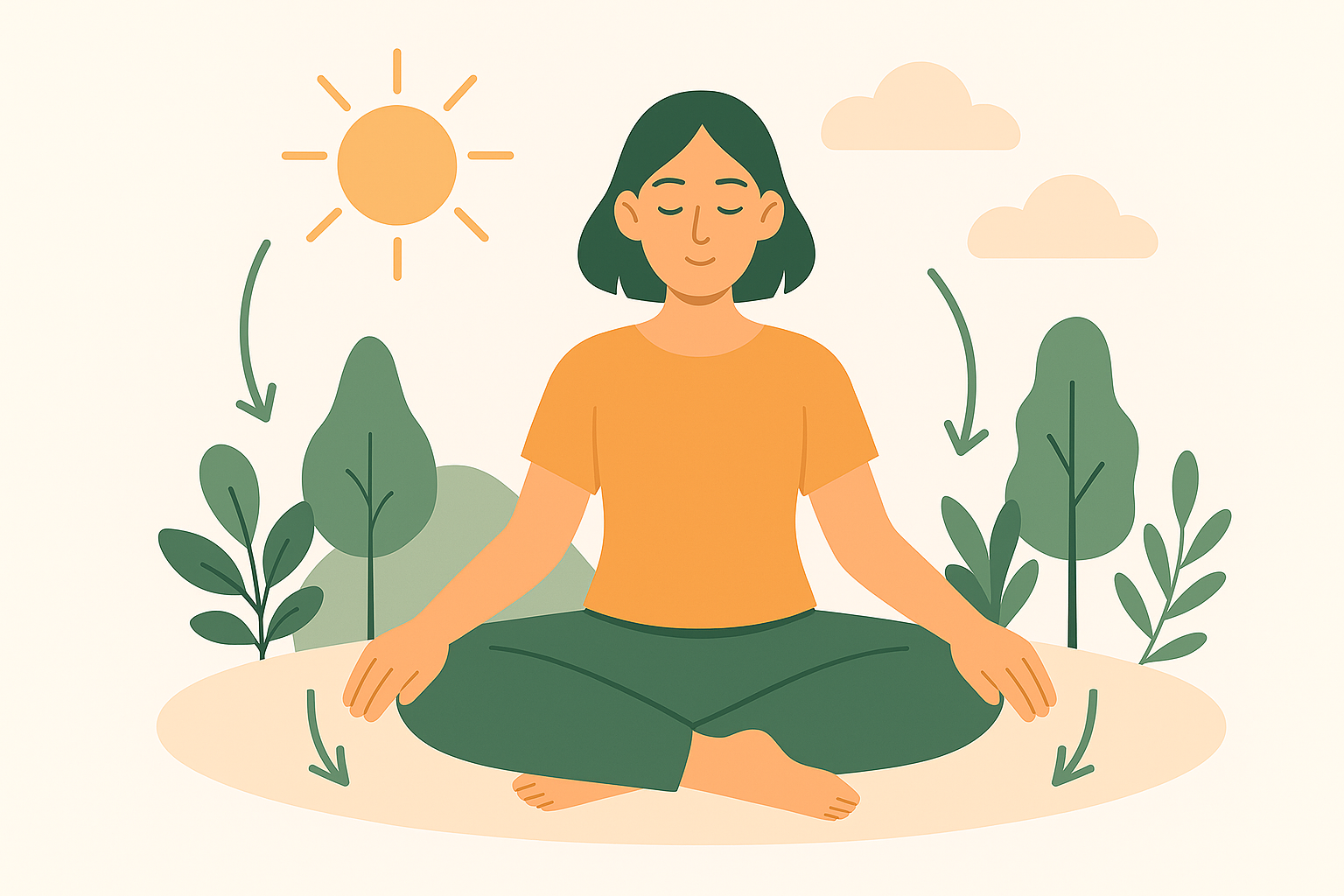
When stress, anxiety, or mental overwhelm takes over, the mind often disconnects from the present moment. Thoughts race ahead, emotions intensify, and the nervous system shifts into survival mode. Grounding exercises are practical tools designed to interrupt this pattern by reconnecting attention with the body and the here-and-now. Research from Harvard Medical School, the American Psychological Association, the National Institutes of Health, and Stanford University shows that grounding techniques help regulate the nervous system, reduce anxiety, and improve emotional stability.
Grounding exercises are not about avoiding thoughts or suppressing emotions. Instead, they help the brain shift from threat-based processing back into a state of safety and awareness. When practiced regularly, grounding becomes a reliable way to restore calm and clarity throughout the day.
If you’re building a daily mindfulness toolkit, you may also find this helpful:
Using Breath to Anchor the Mind
What Are Grounding Exercises?
Grounding exercises are techniques that anchor attention in physical sensation, the environment, or the present moment. They work by engaging the senses and body awareness, which signals safety to the brain.
According to the APA, grounding helps deactivate the stress response by shifting attention away from internal distress and toward external reality.
Grounding exercises are especially helpful for:
- anxiety and panic
- overthinking and rumination
- emotional overwhelm
- dissociation or feeling “checked out”
- daily stress accumulation
The Science Behind Grounding
Grounding works because it directly affects the autonomic nervous system. When stress is high, the sympathetic nervous system dominates, increasing heart rate, muscle tension, and mental alertness.
Grounding exercises activate the parasympathetic nervous system, which slows the body down and restores balance. Harvard research shows that physical awareness and sensory input help calm the amygdala—the brain’s threat detection center.
In short, grounding shifts the body from “fight or flight” to “rest and regulate.”
Why Grounding Is Essential for Daily Life
Stress doesn’t only come from major events. It builds quietly through emails, deadlines, screens, noise, and constant mental stimulation. Without regular regulation, the nervous system stays mildly activated all day.
Daily grounding exercises help:
- prevent stress buildup
- restore focus and clarity
- improve emotional regulation
- increase body awareness
- support mental resilience
If stress is a frequent concern, explore:
Science-Backed Ways People Reduce Everyday Stress
Grounding Through the Five Senses
One of the most widely used grounding methods involves engaging the senses to anchor awareness externally.
The 5–4–3–2–1 Grounding Exercise
This technique is frequently recommended by mental health professionals and supported by APA guidance.
- name 5 things you can see
- name 4 things you can feel
- name 3 things you can hear
- name 2 things you can smell
- name 1 thing you can taste
This process redirects attention away from distressing thoughts and into present-moment awareness.
Physical Grounding Exercises
Physical grounding uses body sensation to signal safety to the brain.
1. Feet-on-the-Floor Awareness
Place both feet firmly on the ground. Notice the pressure, temperature, and support beneath you.
This exercise reinforces a sense of stability and physical presence.
2. Muscle Tension and Release
Briefly tense one muscle group, then release it slowly. This helps discharge stored tension and restore relaxation.
3. Hand Temperature Awareness
Rub your hands together and notice warmth and sensation. This simple movement re-engages physical awareness.
Breath-Based Grounding Exercises
Breathing is one of the fastest ways to ground the nervous system.
NIH research shows that slow, controlled breathing improves heart rate variability and reduces stress response.
Extended Exhale Breathing
- inhale for 4 seconds
- exhale for 6–8 seconds
This signals safety and helps slow racing thoughts.
For deeper breath-focused practices, see:
Breathing Patterns to Calm an Anxious Mind
Grounding Through Movement
Gentle movement grounds attention in the body and releases built-up stress.
Mindful Walking
As you walk, notice each step—the shift of weight, the contact with the ground, and the rhythm of movement.
This can be done indoors or outdoors.
Stretch-and-Notice
Stretch one area of the body and focus on sensation rather than form or performance.
Environmental Grounding
Environment plays a powerful role in nervous system regulation.
Nature-Based Grounding
Stanford research shows that exposure to natural elements reduces activity in brain regions associated with rumination.
Examples include:
- looking at trees or sky
- touching natural textures
- listening to natural sounds
Explore this further here:
The Role of Nature in Reducing Stress
Grounding for Emotional Regulation
When emotions feel intense, grounding provides a pause between feeling and reaction.
Grounding helps you:
- respond rather than react
- stay present during emotional waves
- reduce impulsive responses
For emotional awareness tools, explore:
How to Respond Instead of React
Grounding at Work or in Public
Grounding does not require privacy or special tools.
Subtle grounding methods include:
- pressing feet into the floor
- noticing breath quietly
- naming visible objects
- touching a textured object
These techniques are especially useful during meetings, travel, or crowded environments.
Grounding and Overthinking
Overthinking pulls attention into the past or future. Grounding brings it back to the present.
When overthinking is frequent, grounding interrupts mental loops before they intensify.
Related reading:
The Psychology of Overthinking — And How to Manage It
How Often Should You Practice Grounding?
Grounding works best when practiced consistently, not only during moments of crisis.
You can integrate grounding:
- during morning routines
- between tasks
- before stressful interactions
- in the evening to unwind
Even brief grounding moments help prevent nervous system overload.
Combining Grounding with Other Practices
Grounding pairs well with:
- mindfulness meditation
- breath awareness
- journaling
- gratitude reflection
You may enjoy combining grounding with gratitude:
Gratitude Practice and Your Brain
Common Mistakes with Grounding Exercises
Grounding is gentle by design. Common mistakes include:
- trying to force calm
- expecting instant relief
- judging the experience
- giving up too quickly
Grounding works through repetition and patience.
Final Thoughts
Grounding exercises are practical, science-backed tools that support daily emotional balance and nervous system regulation. They do not require special equipment, long sessions, or perfect focus—only awareness.
By reconnecting with the body, senses, and environment, grounding restores a sense of safety and presence that the mind often loses under stress.
When practiced regularly, grounding becomes not just a technique, but a way of meeting daily life with steadiness and clarity.
More grounding and mindfulness tools from MindBloomDaily:
Using Breath to Anchor the Mind
Daily Mindfulness Prompts