Many people turn on music to help them concentrate—whether they’re studying, working, or trying to stay productive. But have you ever wondered why music helps some people focus while distracting others? Research from Harvard Medical School, Stanford University, and the American Psychological Association shows that music can influence attention, memory, emotional state, and productivity in measurable ways.
While some types of music enhance focus, others can interrupt cognitive processing depending on melody, tempo, lyrics, and personal preference. This article explains how music affects your focus and how to choose the right sounds to support deep work and mental clarity.
The Brain on Music: What Science Shows
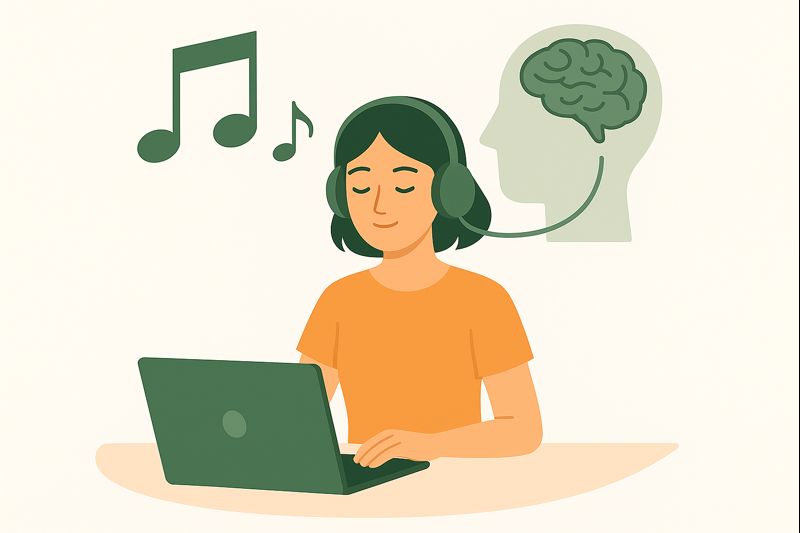
Music engages multiple brain regions simultaneously—areas linked to attention, emotion, memory, and sensory processing. According to Harvard neuroscientists, music can alter brainwave patterns, reduce stress, and improve cognitive endurance.
Here’s how music influences the brain:
- Regulates mood through dopamine release
- Enhances focus by aligning brainwave activity
- Reduces stress by lowering cortisol levels
- Improves motivation during repetitive tasks
- Supports creativity by stimulating the default mode network
Stanford’s research shows that certain music patterns cause the brain to “anticipate” what comes next, which improves attention and information processing.
If you’re exploring other ways to sharpen concentration, consider reading: Simple Ways to Improve Focus Without Caffeine.
How Music Can Improve Focus
Not all music affects the mind the same way. Specific qualities—such as rhythm, tempo, and instrumental structure—determine whether music boosts or breaks concentration.
1. Music Helps Create a Focused State of Mind
Music can shift the brain into “flow,” a mental state of deep concentration. Harvard studies show that repetitive, predictable sound patterns help the mind stay immersed in a task without distraction.
Music is especially helpful when you need to:
- Block background noise
- Reduce internal stress
- Stay motivated during long tasks
- Maintain energy throughout the day
If you struggle with constant digital interruptions, see: Clean Your Digital Space, Clear Your Mind.
2. Music Helps Regulate Emotions
Music influences the limbic system, which regulates emotional states. Calmer music reduces stress, easing mental fatigue and improving clarity. Upbeat music boosts motivation during routine or repetitive tasks.
Emotion regulation is a major factor in concentration. When you feel calm or emotionally balanced, focusing becomes easier.
3. Music Boosts Dopamine
Listening to enjoyable music triggers dopamine release—the same neurotransmitter associated with reward and motivation. This can increase the ability to stay engaged, especially during tasks that feel boring or challenging.
APA research shows that dopamine improves task persistence and reduces procrastination tendencies.
When Music Helps Focus (and When It Doesn’t)
Music doesn’t affect everyone the same way. Factors such as personality, work style, and task type influence whether music improves or disrupts focus.
Music Helps When:
- You’re doing repetitive or familiar tasks
- You’re working in a noisy environment
- You need emotional or motivational support
- You’re trying to block internal worry or overthinking
Music Hurts Focus When:
- You’re reading complex material
- You’re solving analytical or math-heavy problems
- The music contains lyrics that compete with language processing
- The beats or tempos are too stimulating
In these cases, silence or ambient sounds perform better.
If you’re unsure which environment improves your concentration, read: Sound vs. Silence: What Helps People Sleep Better? — it also applies to daytime focus.
The Best Types of Music for Focus
Based on research from Stanford, Harvard, and cognitive psychology experts, certain types of music consistently support better concentration.
1. Classical Music
Often called the “Mozart effect,” classical music—especially Baroque—helps improve concentration and information retention due to its balanced rhythm and non-distracting structure.
2. Lo-Fi Beats
Lo-fi hip-hop has become a global study staple because of its steady rhythm, calming tone, and lack of distracting lyrics.
Benefits include:
- Reduced stress
- Mood regulation
- Smoother workflow
3. Nature Sounds
Nature sounds like rain, wind, or waterfalls relax the nervous system and mask distracting noises. NIH research shows that natural soundscapes improve cognitive performance and reduce mental fatigue.
4. Ambient or Electronic Music
Minimalist electronic music supports deep focus by creating a rhythmic, predictable pattern that the brain can follow effortlessly.
5. Instrumental Movie Soundtracks
Soundtracks are designed to evoke emotion and maintain momentum—making them ideal for creative or deadline-heavy work.
How Your Personality Affects Music and Focus
Research from APA shows that introverts and extroverts may respond differently to background music:
- Introverts tend to be more sensitive to stimulation, so quiet, calm music works better.
- Extroverts may benefit from upbeat or rhythmic music because they naturally seek more stimulation.
Self-awareness is key. Paying attention to how music affects your concentration helps you choose more effectively.
If you want to understand your internal patterns better, explore: Self-Reflection vs. Overthinking.
How Music Can Help During Stressful Work Sessions
When stress rises, the mind becomes distracted and reactive. Music helps regulate emotional responses by calming physiological reactions such as increased heart rate or muscle tension.
Harvard research shows that music reduces cortisol, improving emotional stability and allowing your mind to stay anchored in the task.
How to Use Music Strategically for Better Focus
Using music effectively means choosing the right type for the right task—not just pressing play.
1. Match Music to Task Complexity
Use:
- Instrumental or ambient music for deep work
- Lo-fi or soft beats for repetitive tasks
- Silence or nature sounds for highly complex tasks
2. Keep the Volume Low
Research shows that quiet background music is more effective than loud tracks, which overstimulate the brain.
3. Avoid Lyrics for Deep Work
Lyrics compete with your brain’s language-processing centers, making reading or writing tasks harder.
4. Create a “Focus Playlist”
Having a consistent playlist trains your brain to associate certain sounds with productivity. This supports habit formation and emotional priming.
For more habit-building support, read: How to Stay Consistent With New Habits.
5. Use Music as a Transition Tool
Play calming or instrumental music for a few minutes before beginning deep work. This signals your mind to shift into focus mode.
When Silence Is Better Than Music
Although music benefits many, silence can be even more effective in certain situations. Complex tasks that require analytical thinking—such as coding, writing, or studying technical material—often benefit most from quiet environments.
NIH findings show that silence supports deeper cognitive processing and reduces mental load.
Listening to your mind’s preference is essential. Some days music helps, other days silence works best.
Music for Focus vs. Music for Relaxation
Not all calming music supports focus. For example, very slow or dreamy tracks may induce sleepiness instead of alertness. The key is choosing sound that creates a balanced state: calm but attentive.
To explore relaxation techniques that improve mental clarity, read: How Deep Breathing Can Help Calm the Mind.
Final Thoughts
Music can be a powerful tool for improving focus—but only when used intentionally. The right kind of music can enhance concentration, regulate emotions, and help you enter deep-work states. The wrong type can distract your mind and break your flow.
The key is experimentation. Pay attention to what helps you work better, think more clearly, and stay emotionally balanced. With practice, you can use music as a reliable tool for productivity and mental clarity.
More Focus & Productivity Resources:
How to Design a Distraction-Free Work Day
Creating a Personal Focus System