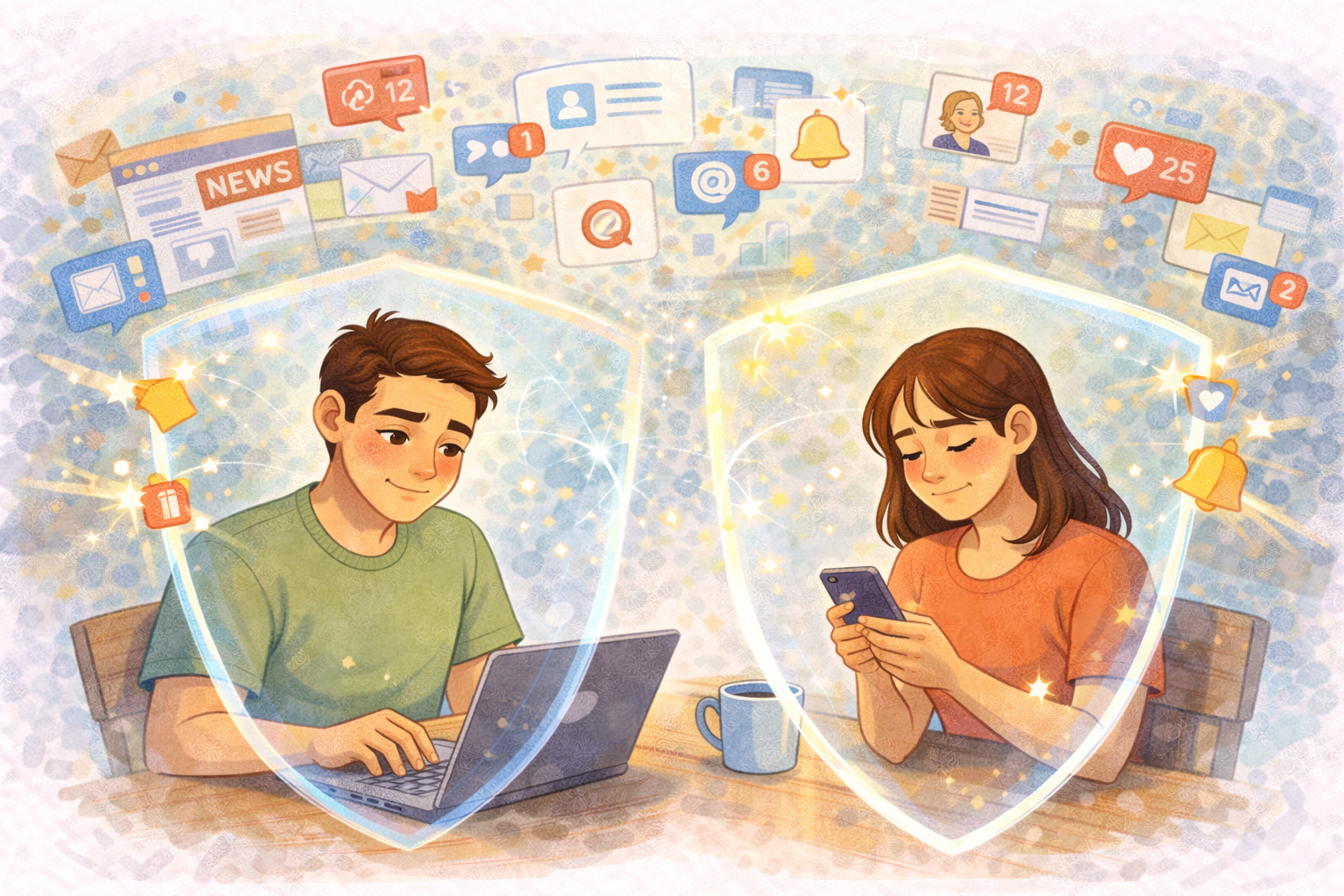
Being online is no longer optional. Work, communication, learning, and entertainment all flow through digital channels. While technology brings convenience and connection, it also places constant demands on attention. Over time, these demands drain mental energy—the cognitive and emotional capacity needed to focus, regulate emotions, and make decisions. Research from Harvard Medical School, the American Psychological Association, the National Institutes of Health, and Stanford University shows that unmanaged digital exposure contributes to mental fatigue, stress, and reduced focus.
Protecting your mental energy online is not about avoiding the internet. It is about using it intentionally, in ways that support clarity rather than depletion.
If you are already exploring digital balance, you may also find this helpful:
Online Overwhelm and Mental Fatigue
What Is Mental Energy?
Mental energy refers to the brain’s capacity to concentrate, regulate emotions, and make thoughtful decisions.
Unlike physical energy, mental energy can be drained without obvious effort—especially through constant digital input.
Harvard research shows that attention is a finite resource. When it is repeatedly fragmented, mental energy declines.
Why Online Spaces Drain Mental Energy
Digital environments are designed to compete for attention.
Notifications, updates, messages, and content feeds constantly pull focus outward.
Each interaction requires processing, even when brief.
NIH-supported studies show that continuous cognitive engagement without recovery leads to exhaustion.
The Cost of Constant Availability
Being reachable at all times increases mental load.
The brain remains in a semi-alert state, anticipating interruptions.
APA research links constant connectivity to elevated stress and reduced emotional regulation.
Boundaries restore recovery.
Mental Energy vs Productivity
Productivity is often measured by output.
Mental energy determines sustainability.
Without protecting mental energy, productivity becomes short-lived and draining.
Focus depends on energy availability.
Notifications as Energy Leaks
Notifications fragment attention and consume mental energy.
Even silent alerts trigger cognitive processing.
Stanford research shows that interruptions increase mental fatigue and task-switching costs.
Related reading:
How Notifications Fragment Your Focus
Information Overload and Cognitive Drain
The internet delivers more information than the brain can process.
Filtering relevance becomes exhausting.
APA research links information overload to poor decision-making and mental strain.
Less input often leads to clearer thinking.
The Dopamine Loop and Energy Depletion
Many platforms rely on variable rewards to keep users engaged.
This activates dopamine-driven anticipation.
Repeated anticipation without fulfillment drains mental energy.
Learn more here:
The Dopamine Loop: Understanding the Scroll Addiction
Protecting Mental Energy Starts With Awareness
Awareness reveals where energy is being lost.
Noticing patterns of fatigue, irritability, or distraction highlights digital drains.
Self-observation is the first step toward protection.
Setting Digital Boundaries
Boundaries define when and how digital tools are used.
Examples include:
- scheduled email checks
- notification limits
- screen-free time blocks
Boundaries preserve energy.
Creating Low-Stimulation Zones
Some environments should support rest and focus.
Bedrooms, meals, and deep work periods benefit from reduced digital input.
Environmental design protects attention.
Related reading:
Creating a Digital Curfew
Reducing Digital Noise
Digital noise includes unnecessary alerts, cluttered interfaces, and excess apps.
Cleaning digital space reduces mental load.
Related reading:
Clean Your Digital Space, Clear Your Mind
Single-Tasking to Preserve Energy
Multitasking drains energy quickly.
Single-tasking reduces cognitive switching.
Stanford studies show sustained focus conserves mental resources.
Related reading:
The Power of Single-Tasking Over Multitasking
Protecting Emotional Energy Online
Emotional energy is closely tied to mental energy.
Online comparison, conflict, and negativity increase emotional strain.
Curating feeds protects emotional wellbeing.
Related reading:
Social Media and Relationship Anxiety
Mindfulness as an Energy Shield
Mindfulness increases awareness of attention shifts.
It helps notice when energy is draining.
Stanford research shows mindfulness improves attentional control.
Explore mindfulness basics here:
What Is Mindfulness and How to Start?
Scheduling Digital Recovery Time
Recovery restores mental energy.
Offline activities support replenishment.
Examples include walking, journaling, or quiet reflection.
Related reading:
The Case for Analog Journals
Sleep as a Mental Energy Foundation
Sleep restores cognitive resources.
Evening screen use disrupts recovery.
NIH research links sleep deprivation to reduced focus and emotional regulation.
Related reading:
The Impact of Screen Time on Sleep Quality
Protecting Mental Energy at Work Online
Remote and digital work increase exposure.
Structured focus periods and clear communication reduce overload.
Intentional design supports sustainability.
Common Myths About Mental Energy
- Myth: You can push through indefinitely
Reality: Mental energy is finite - Myth: Being busy equals being effective
Reality: Focus drives quality - Myth: Rest is unproductive
Reality: Rest restores capacity
When Mental Energy Is Already Depleted
Recovery requires reducing stimulation.
Lowering input precedes rebuilding output.
Gentle pacing supports restoration.
Making Mental Energy Protection a Habit
Habits reduce decision fatigue.
Consistent boundaries become automatic.
Over time, energy stabilizes.
Final Thoughts
Protecting your mental energy online is an act of self-respect.
Digital tools are powerful, but attention is precious.
When mental energy is protected, focus deepens, emotions stabilize, and online life becomes more intentional.
You do not need more discipline—you need fewer drains.
More digital wellness insights from MindBloomDaily:
Reducing Screen Time Without Feeling Deprived
How to Design a Distraction-Free Work Day