


Deep breathing is one of the simplest, fastest, and most reliable ways to calm the mind—and it’s backed by strong scientific research. When stress builds up, the breath is often the first thing to change. It becomes shallow, fast, or uneven, signaling the brain that something is wrong. By consciously slowing the breath, you send the opposite message: the body is safe, and it can relax.
The beauty of deep breathing is its accessibility. You don’t need equipment, a quiet environment, or previous experience. You only need your breath. And unlike other stress-relief methods, it works within minutes.
This article explores the science behind deep breathing, why it calms the mind, and the most effective techniques anyone can practice daily.
Why Deep Breathing Calms the Mind
The connection between breath and mood is strong. When you are stressed, worried, or overwhelmed, your body automatically activates the sympathetic nervous system—your fight-or-flight mode. Deep breathing activates the opposite system: the parasympathetic nervous system, which helps your mind and body relax.
According to Harvard Health, controlled breathing lowers heart rate, reduces stress hormones like cortisol, and activates the vagus nerve—one of the most important nerves for emotional regulation.
Here’s what deep breathing does in the brain and body:
- Reduces stress hormones by signaling safety through the vagus nerve.
- Slows the heart rate and increases heart rate variability (HRV), a marker of emotional resilience.
- Increases oxygen flow to the brain, improving clarity and focus.
- Interrupts anxious thought loops by shifting attention to the present moment.
Research from APA also shows that slow breathing reduces amygdala activation—the part of the brain responsible for fear and stress. This helps the mind return to a balanced, grounded state.
If you’re exploring other ways to calm the mind, you may also enjoy: 5-Minute Meditations for Busy People.
The Science Behind Breath and the Nervous System
Breathing is one of the few functions in the body that is both automatic and controllable. This makes it a powerful bridge between the mind and body. When you breathe deeply, especially with longer exhales, you are directly influencing your autonomic nervous system.
Researchers at Stanford found that certain breath patterns—especially slow, intentional breathing—activate brain regions associated with calm and emotional balance. Their work shows that breath is one of the quickest ways to regulate stress responses.
Here’s why:
- Long exhales increase parasympathetic activity. This is the body’s relaxation mode.
- Slow breathing reduces physical tension and lowers muscle activation.
- Steady rhythmic breath synchronizes neural activity, improving focus and calmness.
Even just one minute of controlled breathing can begin to calm the nervous system. The more consistently you practice, the stronger the calming effect becomes.
Deep Breathing Technique #1: The 4-6 Relaxation Breath
This simple, effective technique is widely used to reduce stress. The longer exhale activates the vagus nerve, creating a calming effect almost immediately.
How to do it:
- Inhale for 4 seconds.
- Exhale for 6 seconds.
- Repeat for 2–5 minutes.
Harvard researchers highlight that even short periods of slow exhalation significantly reduce stress and improve emotional regulation.
If you want complementary calming practices, explore: Breathing Patterns to Calm an Anxious Mind.
Deep Breathing Technique #2: Box Breathing (4-4-4-4)
Box breathing is used by Navy SEALs and high-pressure professionals to remain calm and focused. It balances the nervous system and increases mental stability.
How to do it:
- Inhale for 4 seconds.
- Hold for 4 seconds.
- Exhale for 4 seconds.
- Hold for 4 seconds.
Stanford research shows that structured breathing patterns like box breathing reduce anxiety and improve focus during high-stress situations.
Deep Breathing Technique #3: Diaphragmatic Breathing
Also known as belly breathing, diaphragmatic breathing helps fully expand the lungs and engage the diaphragm. This increases oxygen flow and signals calm through the vagus nerve.
How to do it:
- Place one hand on your chest and one on your belly.
- Breathe slowly into your belly (your lower hand should rise).
- Exhale gently through the mouth.
The National Institutes of Health reports that diaphragmatic breathing reduces cortisol, improves heart rate variability, and helps the body recover from stress.
Deep Breathing Technique #4: The Physiological Sigh
This technique, popularized by Stanford neuroscientist Dr. Andrew Huberman, is a fast and powerful way to reduce stress. It mimics the body’s natural calming reflex.
How to do it:
- Take a deep inhale through the nose.
- Take a second, shorter inhale at the top to fully expand the lungs.
- Exhale slowly through the mouth.
Just 1–3 cycles can significantly lower stress levels. Stanford research shows the physiological sigh is one of the most effective quick-relief breathing tools.
Deep Breathing Technique #5: 4-7-8 Breathing for Calm and Sleep
This technique is particularly effective in the evening or when trying to relax before bed. It slows the heart rate and calms the nervous system.
How to do it:
- Inhale for 4 seconds.
- Hold for 7 seconds.
- Exhale for 8 seconds.
According to Yale and Harvard sleep researchers, slow exhalation activates relaxation pathways that support better sleep quality.
If sleep struggles affect your clarity, explore: Why You Might Be Struggling to Sleep (And Small Fixes That May Help).
How Deep Breathing Helps Reduce Anxiety
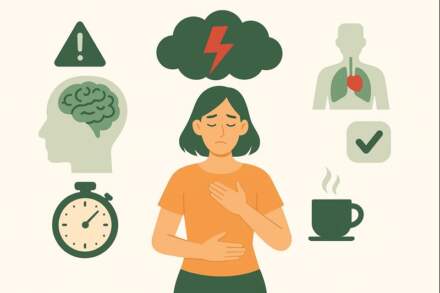
Anxiety often shows up as fast breathing, muscle tension, racing thoughts, and an increased heart rate. Deep breathing interrupts this cycle by restoring the body’s natural balance.
Here’s how breath reduces anxiety:
- Calms the amygdala (the brain’s fear center)
- Regulates heart rate and blood pressure
- Increases oxygen to the prefrontal cortex (responsible for decision-making)
- Stops anxiety spirals by anchoring attention
APA research shows that slow, controlled breathing can significantly reduce anxiety symptoms within minutes.
For additional support with anxiety-related habits, you might find this helpful: How Some People Cope With Anxiety Without Medication.
How Deep Breathing Improves Focus and Clarity
Breathing doesn’t just calm the mind—it sharpens it. More oxygen to the brain means more efficient thinking, improved attention, and better problem-solving.
Stanford neuroscientists found that slow, intentional breathing increases activity in brain networks associated with focus and cognitive performance.
Deep breathing improves clarity by:
- Reducing mental clutter
- Increasing concentration and presence
- Balancing emotional reactivity
- Supporting mindfulness and self-awareness
If you’re improving focus habits, see: 10 Daily Habits That May Support Mental Clarity.
How to Make Deep Breathing a Daily Habit
Like any habit, consistency matters. The more often you practice deep breathing, the more quickly your body responds.
Here are practical ways to integrate it into daily life:
- Start the day with 2 minutes of deep breathing.
- Use breathing before stressful conversations or meetings.
- Practice breathing exercises before bed.
- Take a few deep breaths whenever your mind feels overwhelmed.
- Pair breathing with existing habits (such as brushing your teeth or making coffee).
Even short sessions can re-center your mind and improve emotional balance.
Final Thoughts
Deep breathing is a scientifically proven, accessible, and powerful tool for calming the mind. It supports emotional regulation, reduces stress, improves focus, and restores a sense of inner balance. Whether you’re overwhelmed, anxious, or simply seeking more clarity, your breath is always available as a grounding resource.
Just a few minutes can shift your entire day.
More Mindfulness Resources:
What Is Mindfulness and How to Start?
Daily Grounding Exercises







Leave a Comment