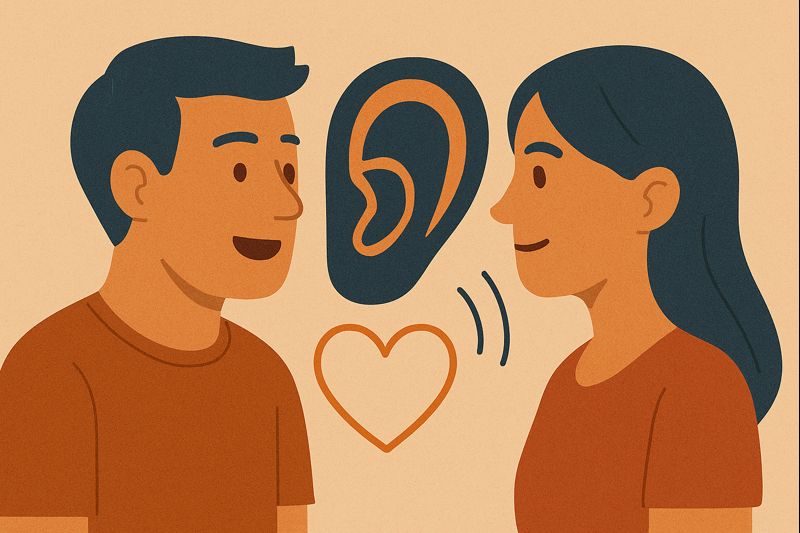
Good communication is not built on how well we speak—it is built on how well we listen. Whether in friendships, romantic relationships, family life, or the workplace, listening is the foundation of trust, emotional understanding, and meaningful connection. Yet most people listen only to respond, not to understand. Research from Harvard Business Review, the American Psychological Association, and Stanford University shows that effective listening deepens connection, reduces conflict, and significantly improves emotional well-being.
Listening is not a passive skill—it is an active practice that strengthens relationships. This article explores science-backed listening techniques that help people feel seen, heard, and valued.
Why Listening Matters More Than We Think
When someone feels truly heard, their nervous system relaxes. This creates psychological safety—a sense of being understood without judgment. According to research from Stanford, genuine listening strengthens not just communication but also emotional bonds and cooperation.
Listening well can:
- Reduce misunderstandings
- Increase empathy
- Ease conflict before it escalates
- Build deeper trust
- Strengthen long-term connection
If you’re exploring ways to improve communication in relationships, you may also appreciate: How to Respond Instead of React.
Skill #1: Active Listening
Active listening involves giving full attention—not just physically, but mentally and emotionally. Instead of preparing your response, you focus on understanding the speaker’s meaning, emotions, and intentions.
Harvard’s research on connection highlights that great listeners contribute to conversations in ways that help the speaker feel supported, not corrected or interrupted.
How to practice active listening:
- Face the person and maintain comfortable eye contact.
- Put away distractions—phone, laptop, or TV.
- Nod, respond with small verbal cues (“I see,” “Go on”).
- Ask clarifying questions without interrupting.
Active listening makes the other person feel respected and valued, which strengthens connection immediately.
Skill #2: Reflective Listening
This technique helps the speaker feel understood by reflecting back what you heard. It is widely used in psychology and conflict resolution because it validates emotions and reduces defensiveness.
The APA notes that reflective listening increases empathy and improves relationship satisfaction.
How to practice reflective listening:
- Repeat or paraphrase the main point: “What I hear you saying is…”
- Identify emotions: “It sounds like you felt…”
- Ask if you understood correctly.
This helps prevent misunderstandings and shows genuine care for the speaker’s emotional experience.
Skill #3: Listening Without Judgment
Judgment blocks connection. When someone feels judged—even subtly—they stop opening up. Nonjudgmental listening is essential for emotional intimacy and trust.
Researchers at UC Berkeley’s Greater Good Science Center highlight that compassion and nonjudgment help the brain stay open and receptive, improving empathy.
Ways to practice nonjudgmental listening:
- Avoid correcting or advising immediately.
- Don’t label the person’s feelings as “right” or “wrong.”
- Focus on understanding instead of fixing.
When people feel safe from judgment, they communicate more honestly and comfortably.
Skill #4: Listening to Emotions, Not Just Words
Good listeners go beyond the literal message. They pay attention to tone, pace, body language, and emotional cues. Emotion-focused listening strengthens connection because it shows deep presence and care.
Stanford communication experts emphasize that emotional attunement builds psychological closeness.
How to practice emotional listening:
- Notice changes in tone or body language.
- Identify what emotion might be underneath the words.
- Respond to the emotion: “It sounds like that was frustrating for you.”
This level of listening helps people feel deeply understood.
To expand emotional awareness, you may also like: Emotional Triggers and Self-Awareness.
Skill #5: Pausing Before Responding
The pause is one of the most powerful listening tools. It gives you time to process the message and respond intentionally rather than react impulsively.
Research from Harvard shows that short pauses reduce conflict, increase clarity, and improve the depth of conversations.
How to practice thoughtful pausing:
- Wait 1–2 seconds after the speaker finishes.
- Breathe before responding.
- Consider the emotion behind the message.
Pausing shows the speaker that you’re taking their words seriously, which strengthens trust and connection.
Skill #6: Asking Better Questions
Great listeners ask questions that invite deeper understanding rather than questions that interrogate. Open-ended questions help the speaker explore their thoughts and feelings.
Examples of connection-building questions:
- “What was the hardest part of that for you?”
- “How did that make you feel?”
- “What do you need right now?”
- “Do you want advice or just someone to listen?”
These questions show care and encourage emotional expression.
For more communication insights, explore: Assertive vs. Aggressive Communication.
Skill #7: Eliminating Distractions
In the digital age, distraction is one of the biggest barriers to connection. Even if you’re technically listening, divided attention weakens the emotional quality of communication.
Harvard research on presence shows that distracted listening makes others feel unimportant.
How to eliminate distractions:
- Put your phone face-down or out of sight.
- Turn off notifications during conversations.
- Give full body and eye attention.
These simple actions instantly strengthen connection because they show genuine interest.
Skill #8: Validating Instead of Fixing
Many people jump into problem-solving mode the moment they hear an issue. But most conversations don’t require solutions—they require understanding. Validation acknowledges someone’s feelings without trying to change them.
Psychologists at APA note that validation strengthens emotional bonds and reduces conflict significantly.
Ways to validate effectively:
- “That sounds really difficult.”
- “I can understand why you’d feel that way.”
- “Thank you for sharing that with me.”
Validation strengthens connection because it shows you accept the other person’s emotional experience.
Skill #9: Being Present in the Conversation
Presence means being fully there—mentally, emotionally, and physically. Research from UC Berkeley’s Greater Good Science Center shows that presence enhances empathy and emotional intelligence.
Ways to increase presence:
- Put aside internal distractions or worries.
- Focus on the speaker’s words and expressions.
- Avoid thinking about your response while they talk.
Presence deepens connection because it shows that you value the person in front of you.
Skill #10: Listening for Meaning, Not Victory
In moments of conflict, people often listen defensively—seeking to prove themselves right rather than understand the other person. This blocks connection.
Healthy listening involves letting go of the need to win. Instead, your goal becomes understanding the other person’s perspective.
How to practice meaning-focused listening:
- Look for common ground instead of points to argue.
- Ask yourself: “What is the emotion behind their words?”
- Affirm their viewpoint even if you disagree.
Listening to understand—not to win—builds trust, respect, and emotional closeness.
How Better Listening Improves All Relationships
Strong listening skills create emotional safety, which is the foundation of meaningful relationships. When someone feels heard, they feel valued. When they feel valued, connection deepens naturally.
Benefits of good listening include:
- Better conflict resolution
- More open and honest communication
- Greater relationship satisfaction
- Increased empathy and patience
- Deeper emotional intimacy
If improving connection is one of your goals, you may also enjoy: Daily Micro-Actions That Build Closeness.
Final Thoughts
Listening is one of the most powerful tools for building trust and strengthening relationships. It requires intention, patience, empathy, and presence—but the reward is deeper emotional connection and healthier communication.
You don’t have to be perfect. Even small improvements in your listening habits can transform your relationships at home, at work, and in everyday life.
More Communication Resources:
How to Set Boundaries Without Guilt
The Role of Empathy in Relationships