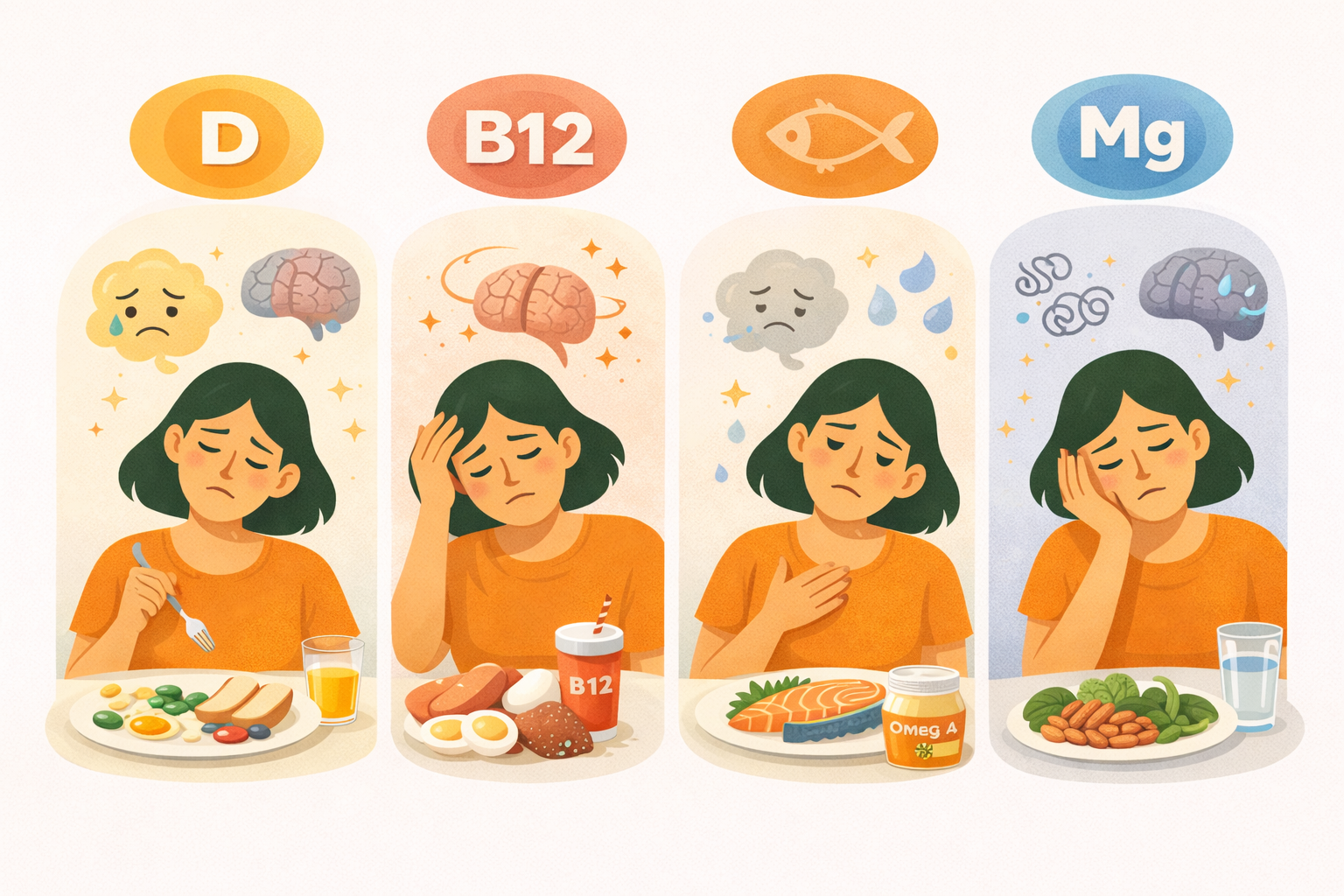
Mental health is often discussed in terms of thoughts, emotions, and experiences, but biology plays a powerful supporting role. Vitamins are essential for brain function, neurotransmitter production, and nervous system regulation. When certain vitamins are deficient, mental health symptoms can quietly emerge or worsen. Research from Harvard Medical School, the National Institutes of Health, the American Psychological Association, and Stanford University confirms that vitamin status can influence mood, cognition, and emotional resilience.
Vitamin deficiencies rarely appear overnight. They develop gradually and often show up as fatigue, irritability, low mood, brain fog, or increased stress sensitivity. Understanding which vitamins matter most for mental health helps explain why nutrition and emotional wellbeing are so closely linked.
If you are exploring nutrition as part of mental wellness, you may also find this helpful:
Brain-Friendly Nutrients to Know
Why Vitamins Matter for Mental Health
Vitamins act as cofactors in hundreds of biochemical reactions in the brain. They support neurotransmitter synthesis, nerve signaling, energy production, and inflammation control.
NIH-supported research shows that vitamin deficiencies can affect:
- mood regulation
- stress response
- memory and focus
- emotional stability
Because mental health symptoms are multifactorial, vitamin deficiencies are often overlooked — even though they are modifiable contributors.
Vitamin B12 Deficiency and Mental Health
Vitamin B12 is essential for nerve health and neurotransmitter production. It plays a role in maintaining the protective myelin sheath around nerves.
Harvard research links low B12 levels to symptoms such as:
- depression
- memory problems
- confusion
- emotional numbness
B12 deficiency is particularly common among older adults, vegetarians, vegans, and individuals with digestive absorption issues.
Folate (Vitamin B9) and Mood Regulation
Folate plays a role in neurotransmitter synthesis, including serotonin and dopamine.
NIH studies show that low folate levels are associated with depressive symptoms and reduced response to antidepressant treatments.
Folate supports:
- emotional balance
- cognitive clarity
- stress resilience
Vitamin B6 and Neurotransmitter Balance
Vitamin B6 is involved in the production of serotonin, GABA, and dopamine.
Deficiency may contribute to irritability, anxiety, and mood swings.
APA-reviewed research suggests that adequate B6 intake supports emotional regulation and nervous system function.
Vitamin D and Mental Health
Vitamin D receptors are found throughout the brain. This vitamin influences neuroplasticity, inflammation, and neurotransmitter release.
Harvard studies show that low vitamin D levels are associated with:
- low mood
- seasonal affective symptoms
- increased stress sensitivity
Vitamin D deficiency is common in individuals with limited sun exposure.
Related reading:
Natural Light and Your Mental Health
Iron Deficiency and Cognitive Health
Iron is essential for oxygen transport to the brain. When iron levels are low, the brain receives less oxygen, impairing cognitive function.
NIH research links iron deficiency to:
- fatigue
- poor concentration
- low motivation
Even mild iron deficiency can affect mental clarity.
Magnesium Deficiency and Stress
Magnesium supports over 300 enzymatic reactions and plays a role in calming the nervous system.
Low magnesium levels are associated with increased anxiety and sleep disruption.
Stanford research suggests magnesium helps regulate stress hormones and neurotransmitter activity.
Explore stress support strategies here:
Science-Backed Ways People Reduce Everyday Stress
Vitamin C and Emotional Resilience
Vitamin C is best known for immune support, but it also influences brain health.
NIH research shows that vitamin C helps regulate cortisol and protect neurons from oxidative stress.
Low vitamin C levels have been linked to fatigue and low mood.
Vitamin E and Brain Protection
Vitamin E acts as an antioxidant, protecting brain cells from oxidative damage.
Harvard research links adequate vitamin E intake to cognitive protection over time.
Oxidative stress contributes to mental fatigue and cognitive decline.
Vitamin A and Cognitive Function
Vitamin A supports neural development and brain signaling.
Deficiency may affect memory and learning, though it is less common in developed countries.
The Gut-Brain Connection and Vitamin Absorption
Vitamin absorption depends heavily on gut health.
Digestive issues, inflammation, or microbiome imbalance can impair nutrient uptake.
Learn more here:
Gut-Brain Connection Explained
How Stress Depletes Vitamins
Chronic stress increases vitamin utilization and excretion.
NIH research shows stress depletes B vitamins, magnesium, and vitamin C more rapidly.
This creates a feedback loop where deficiency worsens stress tolerance.
Signs Vitamin Deficiencies May Be Affecting Mental Health
- persistent fatigue
- brain fog
- low mood or irritability
- poor stress tolerance
- sleep difficulties
These symptoms are not diagnostic but may signal the need for evaluation.
Food vs Supplements
Whole foods provide vitamins alongside supportive compounds such as fiber and antioxidants.
Harvard experts recommend prioritizing food sources first when possible.
Supplements may be useful when deficiencies are confirmed.
Common Myths About Vitamins and Mental Health
- Myth: Vitamins cure mental illness
Reality: They support brain health but are not standalone treatments - Myth: More vitamins are better
Reality: Excess intake can be harmful - Myth: Deficiencies cause immediate symptoms
Reality: Symptoms develop gradually
When to Consider Testing
If mental health symptoms persist despite lifestyle changes, vitamin testing may be helpful.
Healthcare professionals can interpret results safely.
Supporting Mental Health Beyond Vitamins
Vitamins work best alongside:
- regular sleep
- balanced meals
- stress management
- physical activity
Explore lifestyle strategies here:
Mental Clarity Morning Routine
Final Thoughts
Vitamin deficiencies can quietly affect mental health by disrupting brain chemistry, energy production, and stress regulation. While they are rarely the sole cause of mental health challenges, they are important contributors.
Addressing vitamin status is not about quick fixes—it is about creating a biological foundation that supports emotional balance, clarity, and resilience.
Small nutritional improvements can make a meaningful difference over time.
More nutrition and mental health resources from MindBloomDaily:
How Sugar Affects Your Mental State
How Meal Timing Impacts Mood